
Most assisted living communities expect residents to furnish their own room, so a parent typically brings a bed, a comfortable chair, a dresser or nightstand, clothing, bedding, toiletries, medication, documents, and the photographs and keepsakes that make the space feel like theirs. What they cannot bring is everything.
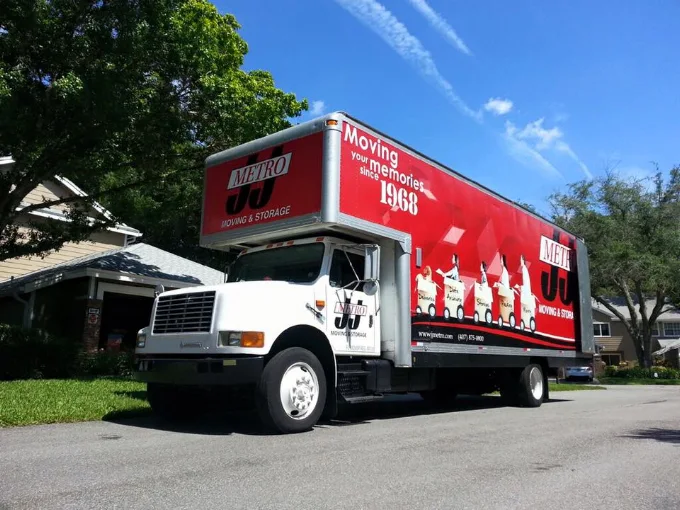
The room is smaller than the house, every community sets its own rules, and the real work is deciding what stays behind. We have handled these moves across Central Florida since 1968, and the families who find them manageable start with the room rather than the belongings.
Start With the Room, Not the Belongings
Before anything gets packed, ask the community for the room dimensions in writing and a floor plan if one exists. Then ask what the room already includes.
Some communities provide a bed, some provide only built-in storage, and a few provide nothing at all. A measured floor plan answers most of the packing questions on its own, because a chair that does not fit is not a decision, it is a delivery problem waiting at the door.
Walk the room with a tape measure if you can, and note the doorway width, the turn into the room, and whether there is a lift. Then measure the furniture your parent actually uses every day rather than the furniture they own.
Clear floor space matters more here than it does in a house, because walkers, wheelchairs, and nighttime trips to the bathroom all need a path. Our residential movers in Orlando handle these move-in days regularly, and the single most common cause of a difficult one is furniture that was never measured against the room.
What Usually Comes With Your Parent
Once the room is measured, the packing list is shorter than families expect. Most of it fits into five categories.
- Furniture that gets daily use, typically a bed, a chair with arms, a small dresser or nightstand, and a lamp
- Bedding and bath items sized for the new bed, including two sets of sheets and a non-slip bath mat
- Clothing for the season, with easy fastenings and shoes with grip rather than smooth soles
- Documents and medical paperwork, identification, insurance details, the medication list and copies of any directives
- Comfort items, which means photographs, a familiar blanket, a clock, a radio and the handful of objects that make a room read as theirs
Keep the first night separate from everything else. Pack an overnight bag with medication, toiletries, a change of clothes, chargers, glasses, hearing aids and a few photographs, and carry it in by hand. The rest can be unpacked over several days, but the first evening in an unfamiliar room goes better when nothing anyone needs is still sealed in a carton.
What Communities Commonly Restrict
Rules vary by community and by the level of care, so get the restrictions in writing rather than assuming. That said, some restrictions appear almost everywhere. Throw rugs and area rugs are frequently prohibited because they are a trip hazard.
Space heaters, candles, and open flame appliances are usually banned outright. Chairs on casters tend to be discouraged for the same reason as the rugs, and some communities cap how much weight can hang on a wall or limit the number of furniture pieces in a room.
Memory care settings are stricter again, and the rooms are often smaller. Cords, sharp objects, certain personal care products, and some appliances may be limited, and shared rooms change the furniture arithmetic entirely.
Ask three questions when you collect the move-in packet. Does furniture need approval before it arrives, what is provided by the community, and what is prohibited. Those answers will cut your packing list faster than any amount of sorting at home will.
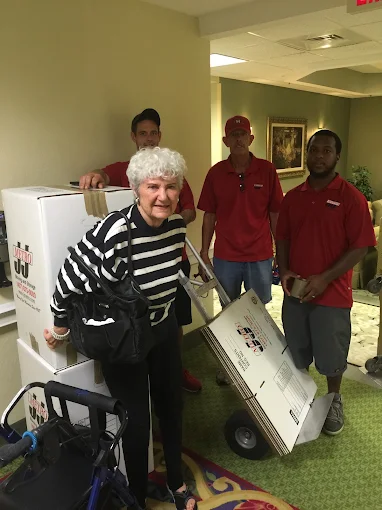
Working to a facility move-in date and need the furniture there on time? Ask us for a free written estimate that covers packing, the move, and anything that needs storing.
Packing Keepsakes and Fragile Pieces
The possessions that cause the most grief in these moves are rarely the large ones. A wedding photograph, a mirror that hung in the hall for forty years, or a small painting carries weight that a sofa does not, and those pieces travel badly in a car trunk. Wrap them properly or have them wrapped.
Artwork, mirrors, glass tops, and antiques often need more protection than a carton gives, which is where a crate built to one item’s dimensions earns its cost.
Our professional packing for fragile keepsakes can cover an entire house, finish a job a family has started, or prepare only the few pieces that genuinely need it. Families often do their own clothing and books and hand us the china cabinet, the framed pieces and the glassware, which is a reasonable split.
One practical note worth knowing in advance is that damage to a carton the owner packed is treated differently from damage to one a crew packed, so the items you would be most upset to lose are the ones worth handing over.
Where the Rest of the House Goes
A room holds a fraction of a house, so plan for the remainder before move-in day rather than after it. Belongings usually divide four ways.
Some go to the new room, some go to family members, some go to donation or sale, and some go into storage because nobody is ready to decide yet. That fourth category is normal, and it is nothing to apologize for. Decisions about a parent’s furniture are rarely made well in the same week the parent moves.
For the pieces that go to brothers, sisters, and grandchildren, our guide to packing family heirlooms covers the condition records and double boxing worth doing first.
Full service storage handles that category without adding another chore. Our crew loads at the house, brings everything to our warehouse about five minutes from I-4 and Maitland Boulevard, and delivers whatever you want when you call for it.
Household goods go into vaults, oversized pieces sit on open racking, and terms run monthly, so the storage period can follow the family’s pace rather than a fixed minimum. Plenty of families use a few months of storage while a house is sold or while siblings work out who takes what.
WORKING TOWARD A MOVE IN DATE?
Measure the room, collect the restrictions in writing, and decide where the rest of the house is going. Then ask us for a free written estimate, and we will plan the day around the community’s access hours rather than around ours.
Related Topics: